
torticollis therapy in denver
We use gentle treatment methods that really WORK! The earlier we begin therapy, the quicker we resolve any symptoms. Don’t wait, let’s start today!
expert Infant Physical Therapy for Babies with torticollis
Is your baby struggling with tummy time, favoring one side, developing a flat spot on their head, or having difficulty with feeding? These could all be signs of a condition called congenital muscular torticollis.
At Progress Through Play, we specialize in helping babies move, feed, and develop with confidence. We use gentle bodywork techniques like craniosacral therapy, myofascial release, and infant massage to help your baby release tension and move easier!
The first year of life is filled with rapid growth and development. When concerns arise, early support can make a significant difference in helping babies build a strong foundation for future movement, feeding, and development.
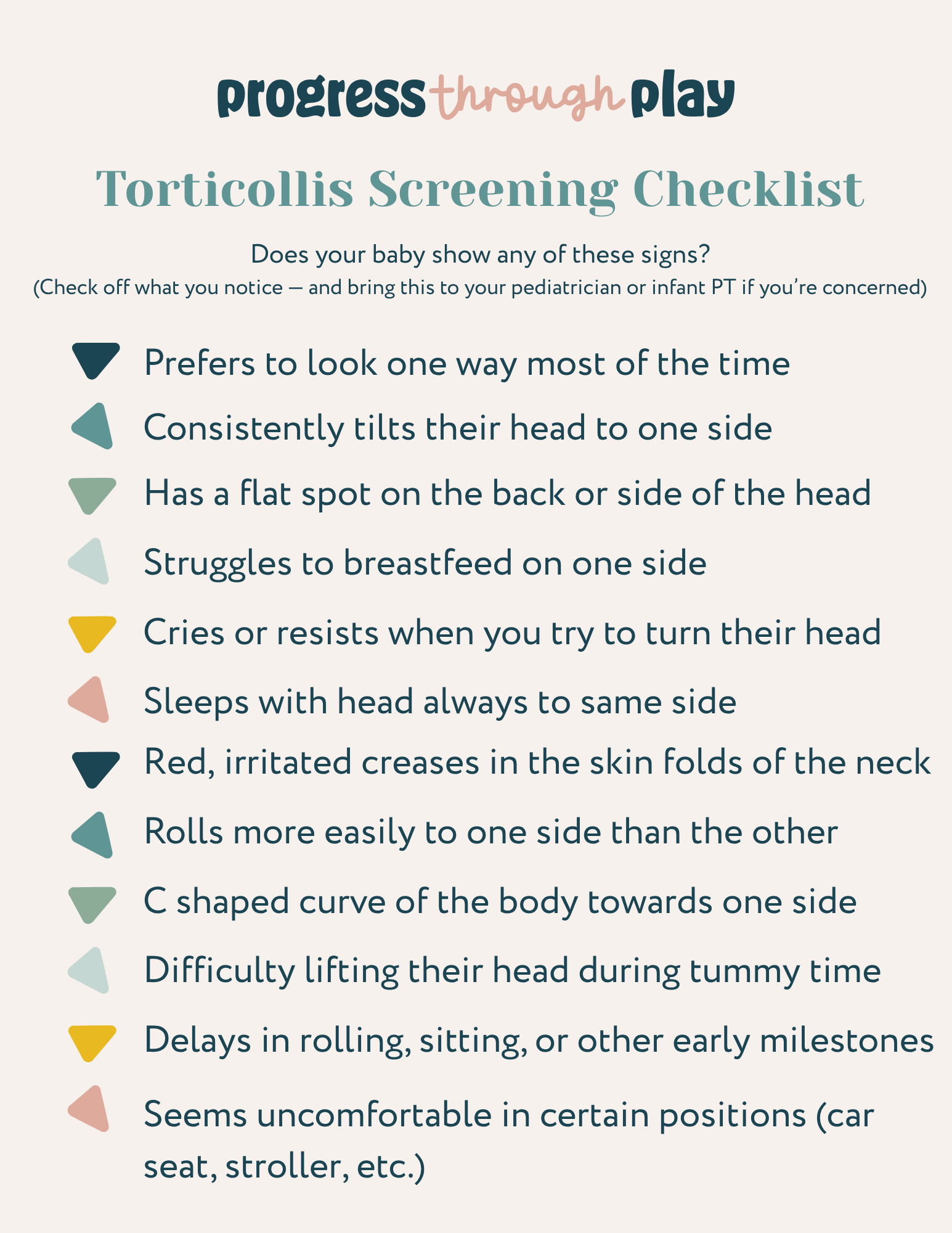
GRAB YOUR FREEBIE!
Download Our Free Torticollis Screening Checklist
Learn how to spot the signs early! Torticollis treatment is most effective the earlier it begins. So don’t wait for that next pediatrician visit. Get the checklist and learn when to self-refer for physical therapy treatment to get your baby more comfortable now.
Why come to see us?
Torticollis and Head Shape Concerns
One of the most common reasons families seek infant physical therapy is torticollis.
Torticollis occurs when a baby has a preference for turning or tilting their head in one direction due to tight muscles in the neck and body. Left untreated, it can contribute to:
Head flattening (plagiocephaly)
Difficulty with feeding
Challenges with tummy time
Delayed motor development
Persistent asymmetries throughout the body
The good news is that early intervention is highly effective. The earlier we identify and address these patterns, the easier they are often to correct.
Infant Feeding and Body Tension
Feeding is a whole-body activity.
Babies who struggle with breastfeeding, bottle feeding, tongue ties, reflux-like symptoms, body tension, or breast preference often benefit from a comprehensive movement assessment.
At Progress Through Play, we take a whole-body approach to feeding challenges by looking at:
Head and neck mobility
Oral function
Postural control
Reflex integration
Body tension and asymmetries
Parent-baby positioning
Our goal is not simply to address symptoms, but to understand what may be contributing to them.
Why Early Intervention Matters
During infancy, the brain and body are developing rapidly. Small movement restrictions and asymmetries can become larger challenges over time if they are not addressed.
Early physical therapy can help:
Improve head and neck mobility
Support feeding success
Promote symmetrical movement patterns
Improve comfort during tummy time
Prevent worsening head flattening
Build a strong foundation for future milestones
Many concerns can be addressed more quickly when identified early.
No guessing. No waiting. Just clear, reliable insight for parents who want to stay one step ahead.
Home Visits Available For Torticollis
We know that getting out of the house with a newborn can be challenging.
That's why we offer home visit physical therapy services throughout Denver and the surrounding metro area. Home visits allow us to evaluate your baby in their natural environment and provide practical recommendations that fit into your family's daily routines.
We also offer clinic appointments for families who prefer an in-clinic setting.
What to Expect During Your Evaluation?
Your first visit includes a comprehensive assessment of your baby's:
Movement patterns
Strength and flexibility
Head shape and positioning
Feeding-related oral motor skills
Developmental milestones
Symmetry and motor skills
Reflexes and coordination
You'll leave with a clear understanding of what we're seeing, recommendations tailored to your baby, and practical strategies you can begin using right away.
Frequently Asked Questions
does my baby need physical therapy for torticollis?
If your baby consistently prefers looking one direction, has a head tilt, or is developing a flat spot, physical therapy is the gold standard and most evidence based treatment method.
Can physical therapy help with tongue ties?
Yes. Many babies benefit from physical therapy before and after a frenectomy to address body tension, feeding mechanics, and movement patterns. PT may even be able to prevent the need for a release procedure!
What age do you see?
We see babies from birth until they take their first steps and help with everything their little bodies need to do and learn throughout that first year of life.