
Myth: Babies Need Shoes When They're Learning to Walk
Fact: Barefoot is best when babies are learning to stand, cruise and take their first steps!
One of the most common questions we get from parents of new walkers is: What shoes should my baby be wearing?
The short answer? Whenever it's safe and practical, let those little feet go barefoot!
Babies don't need shoes to learn how to stand or walk. In fact, spending time barefoot allows developing feet to move naturally and gives babies important sensory feedback as they learn to navigate their environment. Shoes are primarily meant to protect little feet from the elements, rough surfaces and potential hazards when they're outdoors.
Why Barefoot Is Best for New Walkers
Your baby's feet are doing a lot more than you might realize! Feet play an important role in motor development well before those first independent steps.
Think about all the ways babies use their feet throughout development:
Rolling: Feet help babies generate momentum and initiate movement as they learn to roll.
Pivoting: Pushing through the feet helps babies rotate their bodies and explore their environment.
Crawling: Feet provide an important point of contact for pushing and generating forward movement.
Pulling to stand: Babies use their feet to establish contact with the floor and begin bearing weight.
Cruising and walking: Sensory feedback from the feet helps babies explore balance, weight shifting and coordination.
When babies are barefoot, they can feel the surface underneath them, move their toes freely and use the muscles in their feet as they experiment with standing and walking.
Shoes can sometimes limit these opportunities, particularly if they're stiff, heavy or poorly fitted.
Our recommendation: Let your baby spend as much time barefoot as possible when playing and practicing new movement skills indoors, provided the surface is safe and comfortable.
Don't Forget About Foot Play!
Bringing awareness to your baby's feet early on is a fun and easy way to incorporate movement and sensory exploration into your everyday routines.
Here are a few simple ways to get started:
Foot massages: Gently massage your baby's feet during diaper changes or after bath time. Explore the tops, bottoms and sides of their feet.
Toe games: Gently touch individual toes, wiggle them and let your baby explore their feet with their hands.
Barefoot play: Give your baby opportunities to kick, reach for their feet, put them in their mouths, and explore different surfaces with their toes.
Rattle socks: These can be a fun way to encourage babies to look toward their feet, kick and explore their lower extremities.
What About Shoes for Fall and Winter?
Eventually, your baby will need shoes to protect their feet when exploring outside. And here in Colorado, keeping those little toes warm during the colder months is important!
When shopping for shoes for new walkers, here are a few things we recommend looking for:
1. A wide toe box
Little toes need room to spread and move naturally. Avoid shoes that taper toward the front or squeeze the toes together. Remember to account for thicker winter socks when checking the fit.
2. Flexible soles
Look for shoes that bend easily, particularly through the forefoot. Avoid overly stiff, heavy shoes that make it difficult for little feet to move naturally.
3. Good traction
A nonslip sole is especially important when walking on potentially slippery winter surfaces. Look for appropriate traction without sacrificing flexibility.
4. A secure, adjustable fit
Velcro closures are a great option for little ones because they make it easy to adjust the fit. You want the shoe to stay securely on the foot without sliding around or feeling restrictive.
5. Warmth without bulk
Keeping little feet warm is important, but avoid shoes that are so bulky or heavily insulated that they restrict movement or take up too much room. A higher-cut boot can offer additional coverage and warmth, as long as it doesn't restrict comfortable ankle movement.
6. The right size!
This is one of the most important considerations. A shoe can have all the features we recommend and still be a poor choice if it doesn't fit your child's foot. Make sure there is adequate room for the toes, appropriate width and a secure fit around the heel.
Remember, the most expensive shoe or the most popular brand isn't automatically the best choice. Fit matters more than the label!
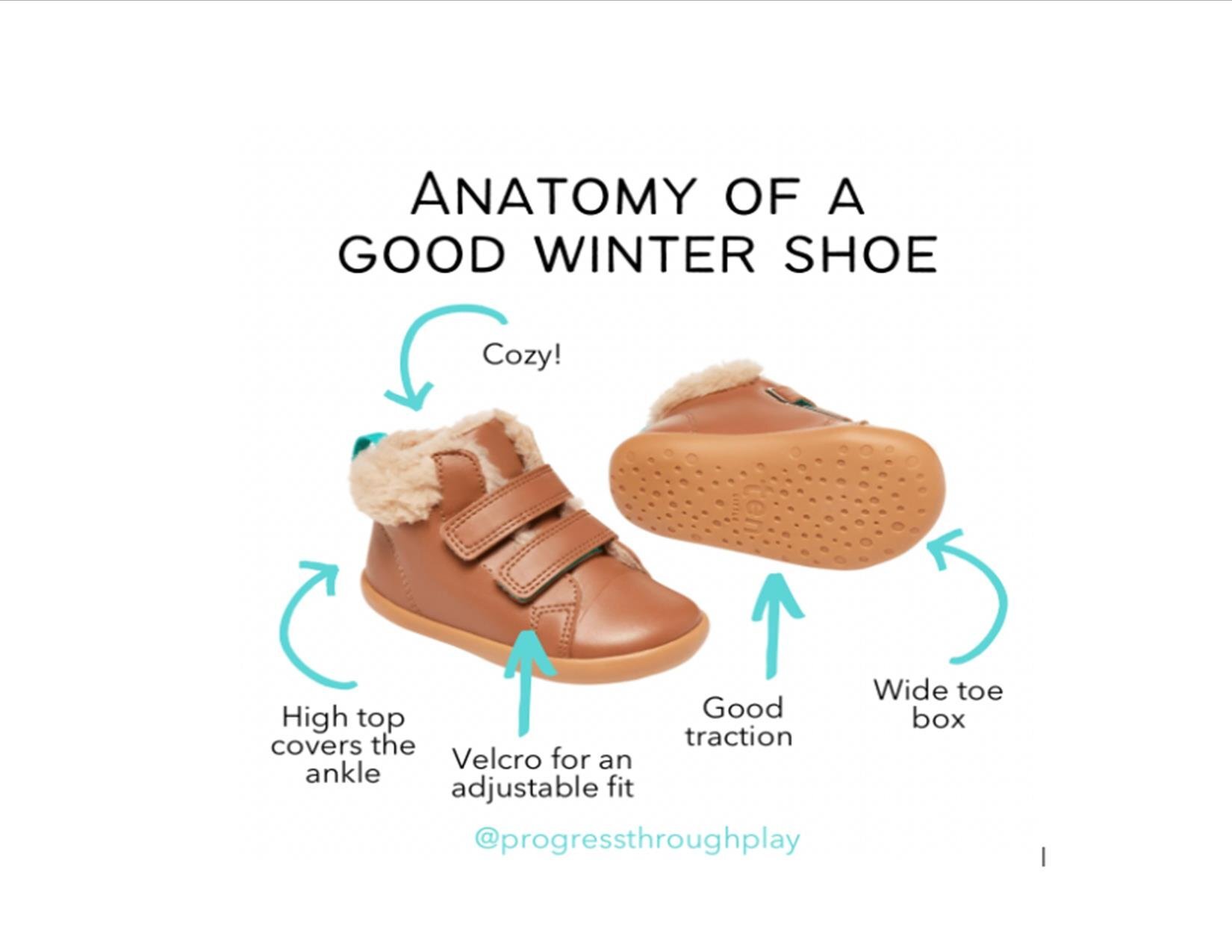
The shoes in the photo (from Ten Little Kids) fit the bill perfectly for everyday winter shoes!
When Should My Baby Start Wearing Shoes?
There isn't a specific milestone or age when babies need to start wearing shoes.
For babies who are learning to pull to stand, cruise and take their first steps, barefoot is generally the best option indoors when the environment is safe.
Once your child starts walking independently and exploring more outdoor environments, shoes become important for protection from the environment.
Even after your child becomes a confident walker, continue offering plenty of barefoot opportunities at home!
Is Your Baby Starting to Walk? We Can Help!
Learning to walk is a big milestone, and there's so much happening behind the scenes as babies develop the strength, balance, coordination and confidence needed to take those first steps.
If your baby is pulling to stand, cruising along furniture or just beginning to take independent steps, we have a few ways to support you along the way!
Join a Wobbly Walkers Class
Our Wobbly Walkers classes give babies and their parents an opportunity to explore movement, practice emerging skills and learn walking through play with guidance from a pediatric physical therapist.
It's a great way to support your little one's next stage of development while connecting with other families navigating the same milestones.
Book an Appointment with Progress Through Play
Wondering if your baby's movement is on track? Noticing asymmetries, difficulty with balance, unusual movement patterns or concerns with how your baby is progressing toward walking?
Our pediatric physical therapists work with babies from birth through first steps. We can assess your baby's movement, identify areas that may benefit from additional support and help you create a plan that makes sense for your family.
We offer in-person appointments throughout the Denver area and virtual care for families across Colorado.
Take Our Online Walking Course
Not local to Denver? Want to feel more confident supporting your baby's transition from crawling to walking?
Our online walking course gives parents practical guidance and activities to support their baby's development through the stages leading up to independent walking. Learn at your own pace, from wherever you are!
At Progress Through Play, we believe babies learn best through movement, exploration and play. Sometimes the simplest things, like letting those little feet go barefoot, can make a big difference in the opportunities we give babies to explore their world.
Happy walking!